





【KYOTOグルメ&アート】c.4-5/かつくら四条東洞院店
カテゴリー:お知らせ, KYOTOグルメ&アート
2023.01.30
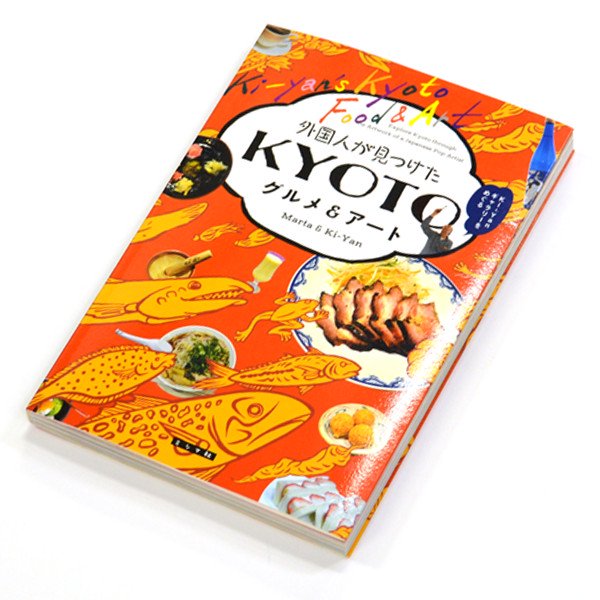
<KYOTOグルメ&アート連載>
キーヤンの壁画を見ながら食事やお買い物を楽しめる京都市内のお店を、日/英 バイリンガルで紹介する、京都ガイドブックとしてもオススメのこちらの一冊。
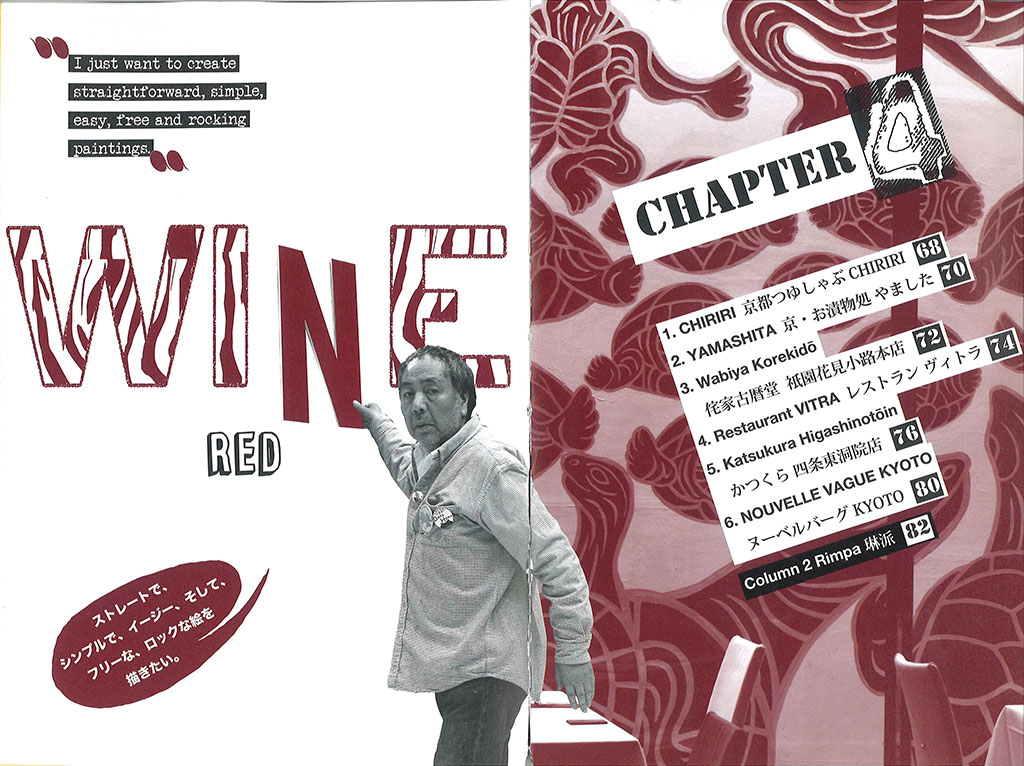
Chapter4-5は「かつくら四条東洞院」さんです。
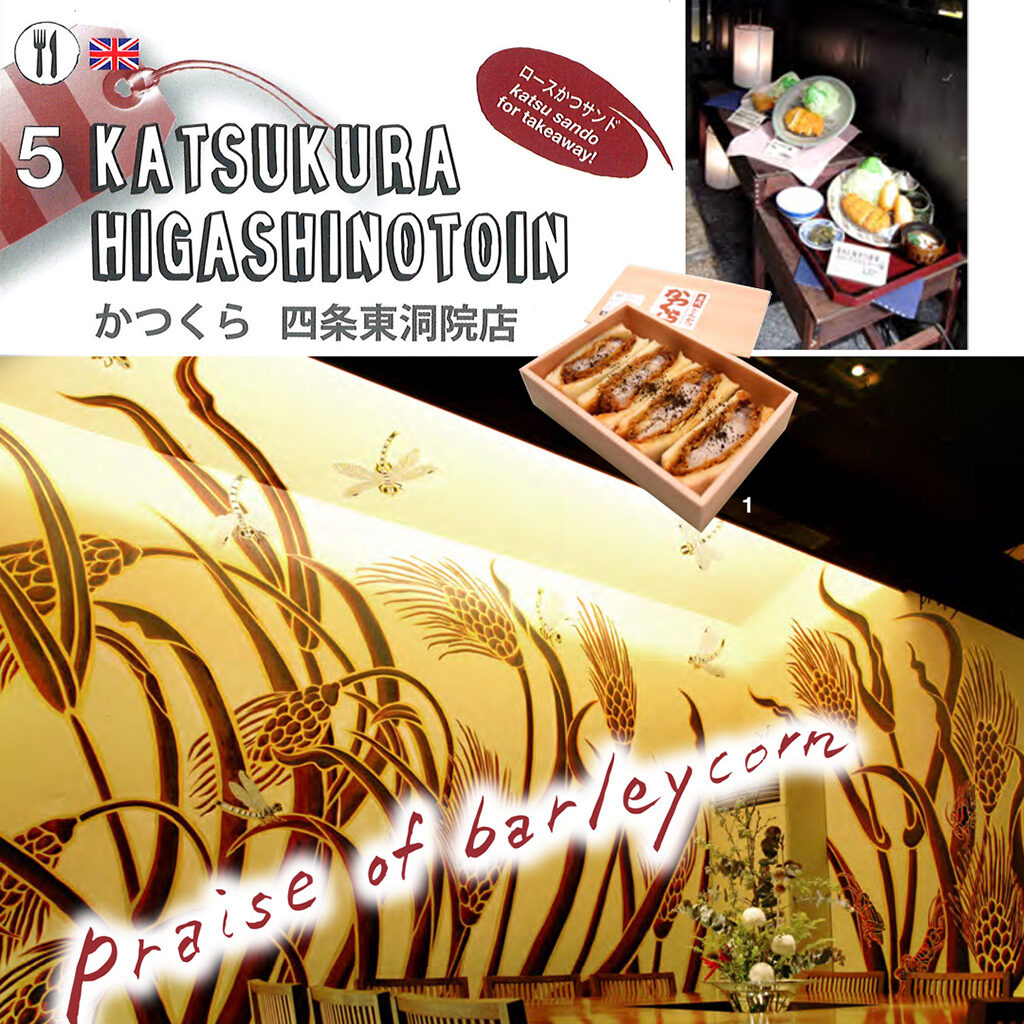
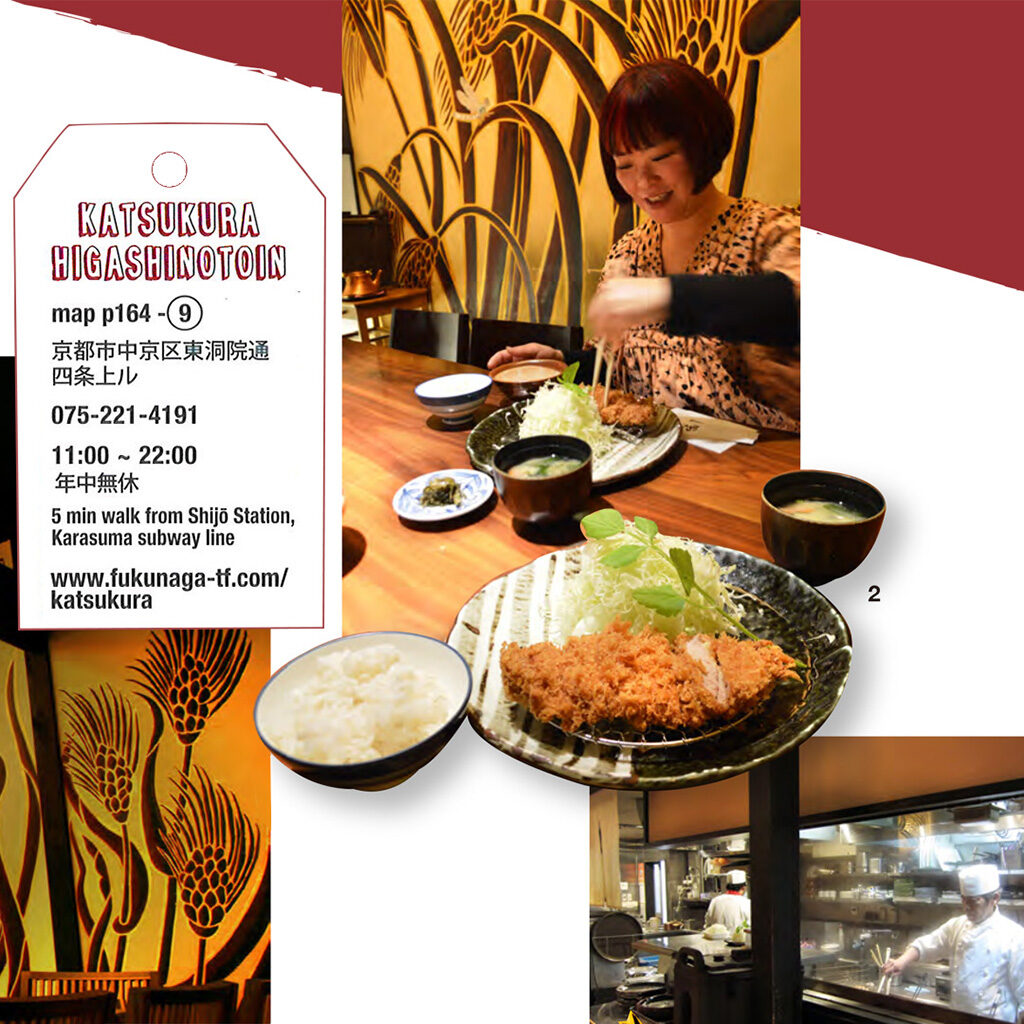
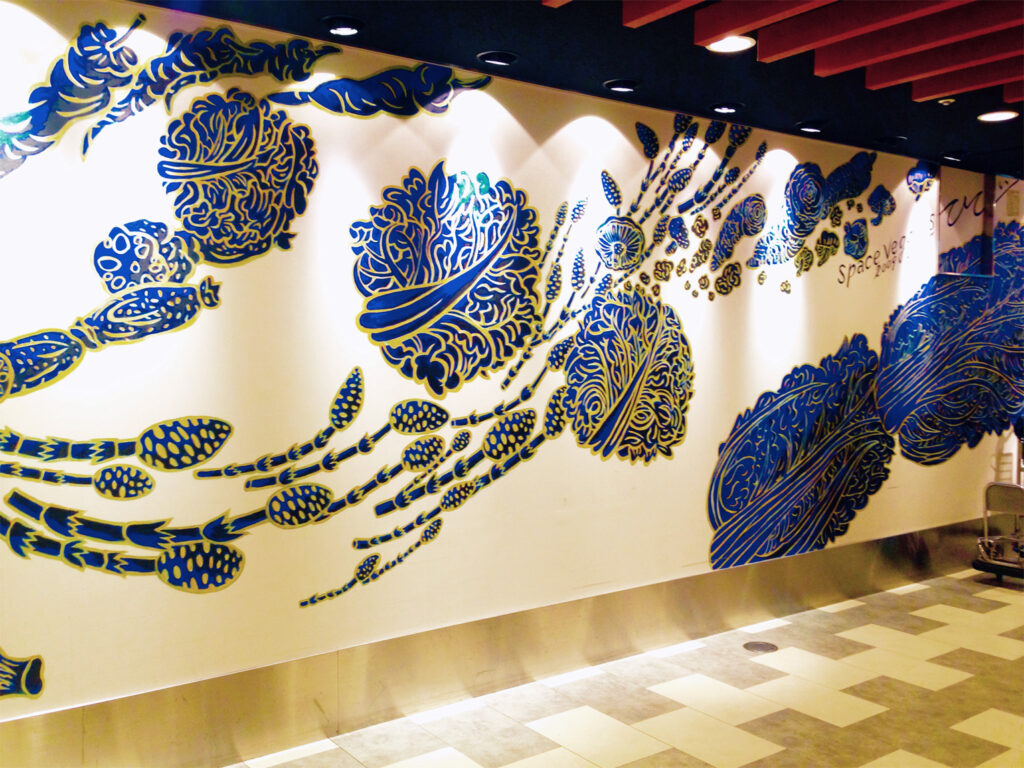
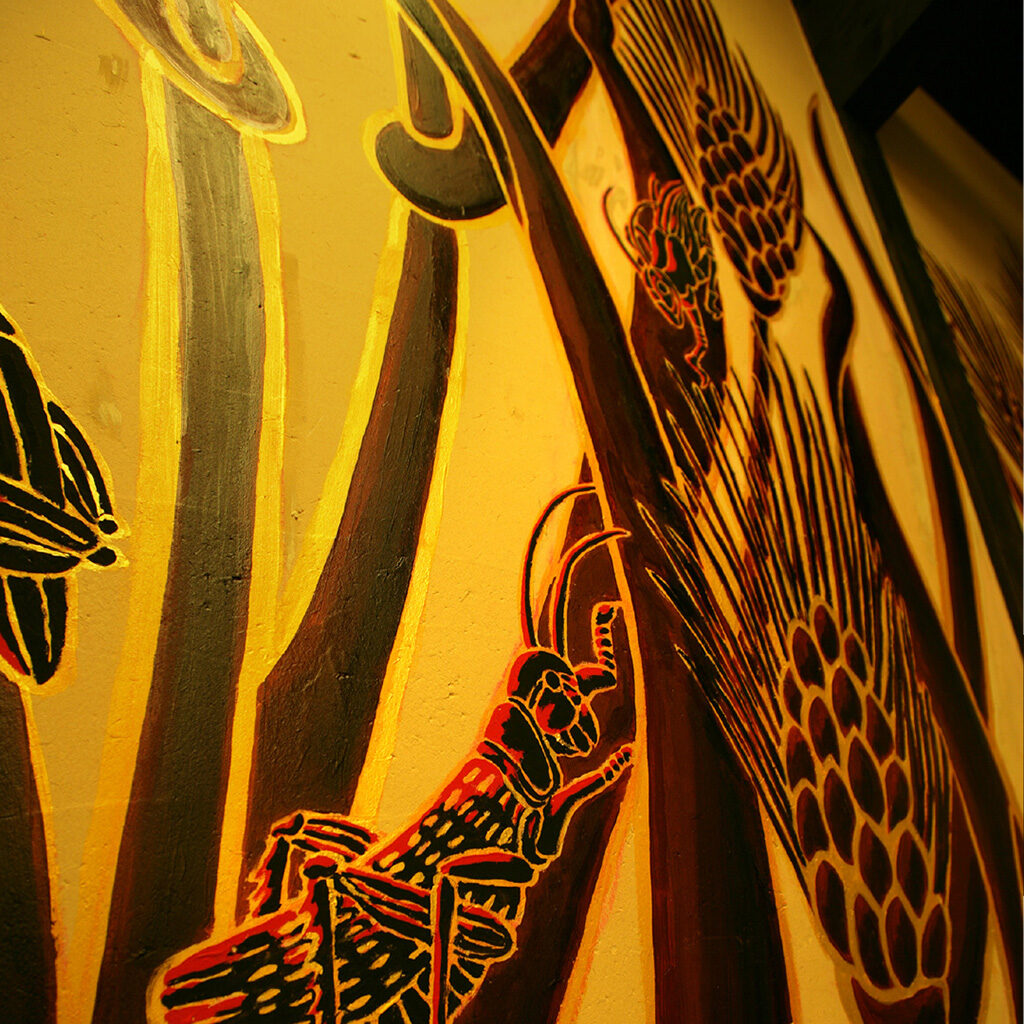
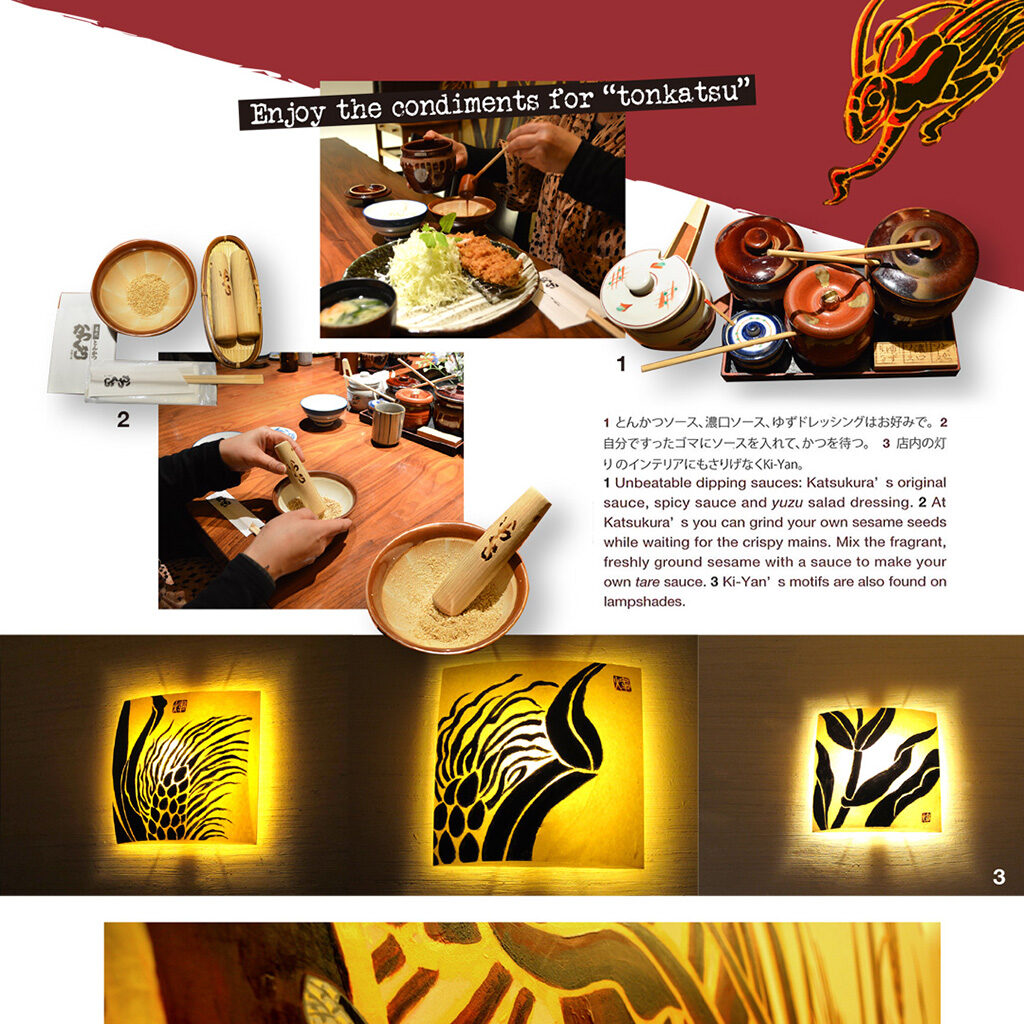
2005年に描かれた、「かつくら四条東洞院店」の作品「麦の賛歌」。同店で出される麦ご飯をモチーフに、豊穣の麦が店内で弾みます。とんかつや大海老かつ、湯葉巻かつなどメインが揚がるまで、すり鉢でゴマをすって待つスタイルはこのかつくらが最初です。店舗リニューアルの際に依頼されたこちらの壁画、実は短期間で仕上げる超過密なスケジュールで、かつくら本社デザイン室のスタッフも徹夜で参加。その一人は今、Team・Ki-Yanで大活躍している 日本画家・武田修二郎氏です。
Ki-Yan painted ‘The Praise of Barleycorn’ at Katsukura’ s Higashinotōin branch in 2005. The barley motif, a symbol of fertility, comes from the signature style of Katsukura’s rice-cooked with barley and served with crispy mains such as tonkatsu (breaded pork cutlets), õebikatsu (prawn cutlets) and yubakatsu (tofu-skinned cutlets). Ki-Yan’s mural painting was commissioned for the restaurant’s reopening and completed in an extremely short time, just before the Gion Festival. Even members of Katsukura’ s head office’s design department needed to work through the night to complete the project on time. One of them, the Nihonga artist Shūjirō Takeda, eventually became a member of Team Ki-Yan.
引用先:外国人が見つけた KYOTO グルメ&アート|Marta & Ki-Yan|ミシマ社
かつくら四条東洞院店 KATSUKURA HIGASHINOTOIN
京都府京都市中京区東洞院通四条上る阪東屋町674
075-221-4191
Ki-Yan.com/WORKS/名代とんかつ かつくら 四条東洞院店
次回はヌーベルバーグKYOTOさんです。お楽しみに!
Instagramのフォロー&いいね!もお願いします!